AI and Autonomy Lab
Intelligent systems can act (semi-)autonomously, working alongside human experts to analyse and help solve complex challenges. Designing good agents needs to balance the ability of agents to work effectively with other agents and human experts to have the maximum real-world impact.
About us
We develop innovative approaches to high-level cognitive reasoning, such as performing collaborative tasks, assessing the cognitive states of other agents, and human-agent interaction.
Our methods are being applied in areas such as scheduling in mine operations, disaster management, and health.
The AI and Autonomy lab is based in the School of Computing and Information Systems at the University of Melbourne, Australia.
Research team
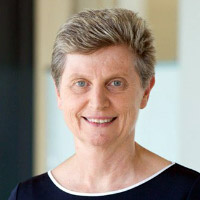 Liz Sonenberg, l.sonenberg@unimelb.edu.au, The University of Melbourne
 Adrian Pearce, adrianrp@unimelb.edu.au, The University of Melbourne
 Michael Kirley, mkirley@unimelb.edu.au, The University of Melbourne
 Nir Lipovetzky, nir.lipovetzky@unimelb.edu.au, The University of Melbourne
 Michelle Blom, michelle.blom@unimelb.edu.au, The University of Melbourne
 Miquel Ramirez, miguel.ramirez@unimelb.edu.au, The University of Melbourne
 Michael Papasimeon, michael.papasimeon@unimelb.edu.au, The University of Melbourne
Research students

 Archana Vadakattu, archana.vadakattu@student.unimelb.edu.au
- Guang Hu, ghu1@student.unimelb.edu.au
 Lyndon Benke, lbenke@student.unimelb.edu.au
- Oliver Kim, okim1@student.unimelb.edu.au



External collaborators
 Frank Dignum, f.p.m.dignum (at) uu.nl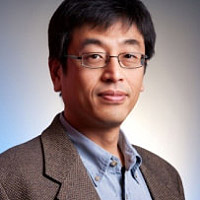
 Tim Miller, tmiller@unimelb.edu.au, The University of Melbourne
 Jens Pfau, jens.pfau (at) cgi.com
 Paolo Felli, paolo.felli@unimelb.edu.au
 Christian Muise, christian.muise (at) gmail.com
 Sergio Jimenez Celorrio, sjimenez@unimelb.edu.au, The University of Melbourne
Completed research students

 Stefan O’Toole, stefan@student.unimelb.edu.au
- Friedrich Burkhard Von Der Osten
- Chris Ewin
Research projects
-
Mining and optimisation
Mine planning is complex with short, medium and long-term objectives that are often competing rather than complementary
-
Automated planning languages
We are actively developing automated programming and planning languages for implementing and planning complex tasks robustly and efficiently in multi-agent systems.
-
Foundations of human-agent collaboration
New techniques in collaborative systems for representing and reasoning about joint task achievement.
-
People-oriented software engineering
Modern technologies can positively transform lives. Many good concepts fail, however, to have a transformative effect by not meeting the individual and emotional needs of intended users.
-
Explainable artificial intelligence
As AI becomes more ubiquitous, complex and consequential, the need for people to understand how decisions are made and to judge their correctness, fairness, and transparency, becomes increasingly crucial due to concerns of ethics and trust.
-
Multimodal human-agent collaboration
Improving human-agent interactions through gaze input and other collaborative modalities.