The first TCP/IP Internet connection to Australia was received by the Department, and the system for the allocation of all domain names in Australia was developed and managed here.
For many years the machine munnari at the Department was the bridge between Australian Internet users and the rest of the world.
Staff selected a series of Aboriginal names for the computer servers, starting with ‘mu’ to denote Melbourne University (‘mulga’, ‘murdu’, ‘mullian’, etc). At the time, there was no consultation with Aboriginal communities regarding the use of the word munnari.
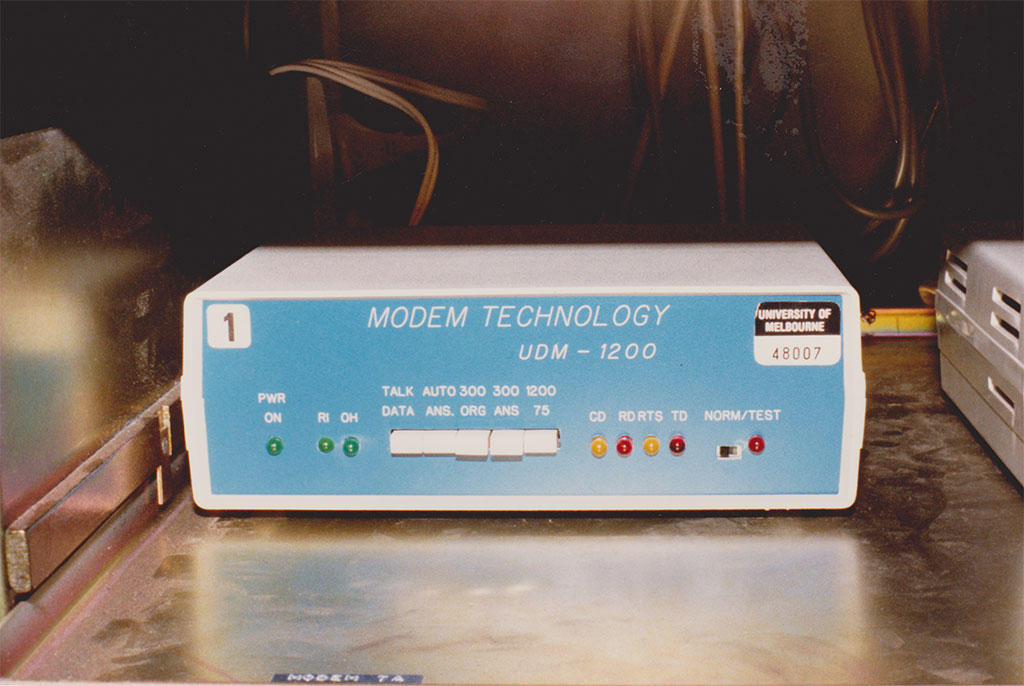
1200bps modem, c1983. University of Melbourne
The University’s pivotal role in Australia’s early Internet was due to Peter Poole’s connections with the international UNIX community and the work of the Department’s System Administrator Robert Elz.
For most of us, the Internet didn’t have a big impact initially. Before the permanent connection, you would rarely be logged on at the same time as the person you wanted to communicate with. Lee Naish, academic, recalls his time as a graduate student in the early 90s
The first connection to the Internet took place on June 22, 1989, in Hawaii (June 23 in Australia), when a TCP/IP connection was opened to the University of Melbourne, conducted by Robert Elz. The subject line of the first message into Australia was “Link Up”.
Early Internet connections were limited by low bandwidth, so information sharing occurred via usenet newsgroups and email, where the exchange of ideas and software led to more sophisticated technology.
The speed of the first Internet connection was 2400 bps; in 2015, an average broadband connection is around 6 Mbps; and today in 2025, the median Australian fixed broadband speeds is around 80 Mbps.
When I enrolled for a MSc in 1991 the CS department had this new thing called the Internet. I had heard a little about this in my previous job… but the real Internet was much more exciting, and Melbourne Uni was one of the few places you could see it. Greg Wadley, former student and current academic
Kevin Robert Elz (usually known as Robert Elz, or kre) and the Department technical team played a major role in establishing and managing the email systems which connected Australian research and academic communities internationally and managed the system for Internet domain name registrations in Australia.
Robert Elz set in place standards such as the “reasonableness” criteria for names, preventing a domain name goldrush from happening in Australia as it did elsewhere. When the demand for domain names eventually exceeded the capacity of even the most dedicated volunteer, the provision of domain names was commercialised by Melbourne IT.
In 2003, Robert Elz was inducted into the Pearcey Foundation Hall of Fame for his pioneering work in connecting Australia to the Internet.
Addressing past wrongs can enable the strengthening of connections now
In 2020, contact was made with the Ngarrindjeri community explaining the unauthorised past use of the name 'munnari' and requesting whether the community would permit continued use, given its significance for the University and internet in Australia.
The Miwi-inyeri Pelepi-ambi Aboriginal Corporation (MIPAAC), which deals with language matters for the Ngarrindjeri community, has endorsed the use of ‘munnari’ for a new computer server. They are pleased to have this historical association with the internet in Australia. MIPAAC has also approved the use of the name for a multifunction space at Melbourne Connect, using the correct orthography, ‘manhari’ or its dialect variation ‘mandhari’.
(A Computer Server and Indigenous Reconciliation - Engineering and IT Collection)
-
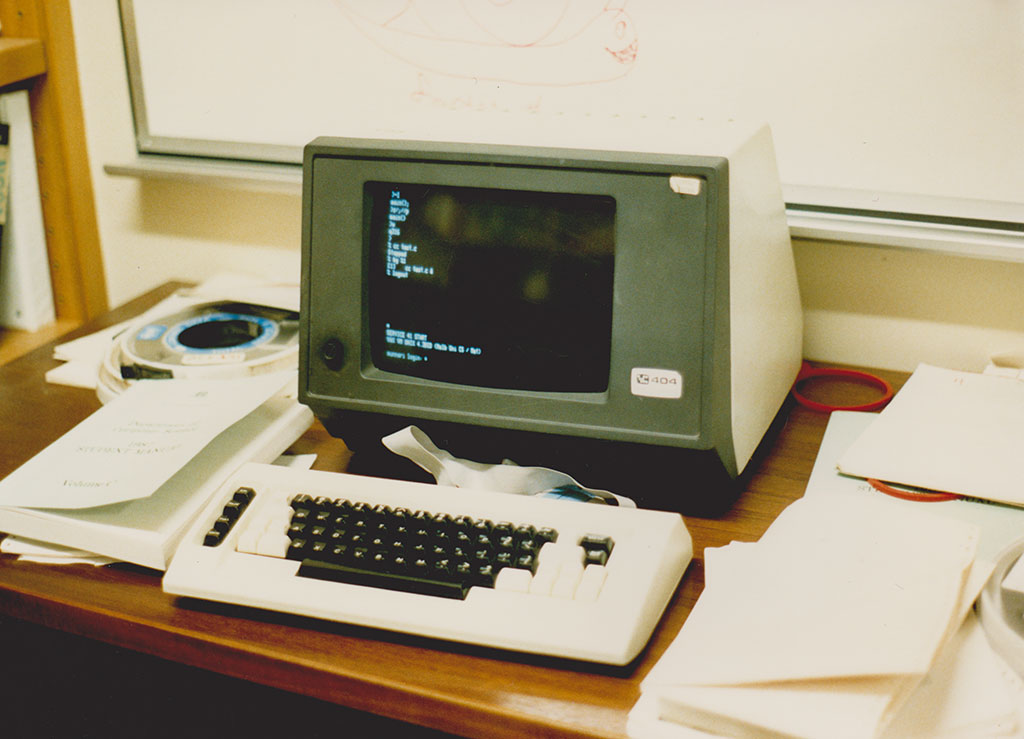
1987 Computer Terminal
Computer terminal c1987. University of Melbourne. -

Melbourne IT
Melbourne IT, the domain name company floated by University of Melbourne in 1999. University of Melbourne. -
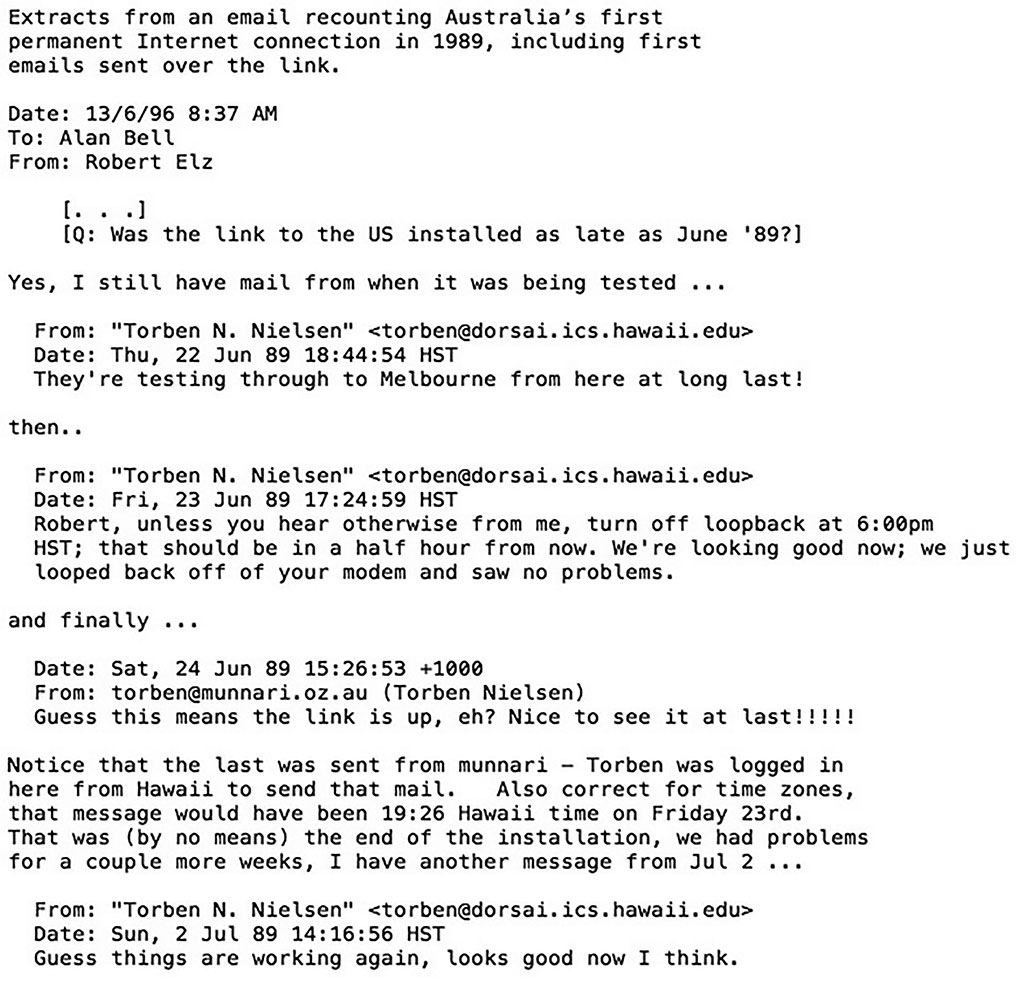
Email recounting Australia’s first permanent Internet connection
Extracts from email recounting Australia’s first permanent Internet connection, 1989. Image courtesy Tim Bell. -
1200bps modem c1983
1200bps modem, c1983. University of Melbourne.